
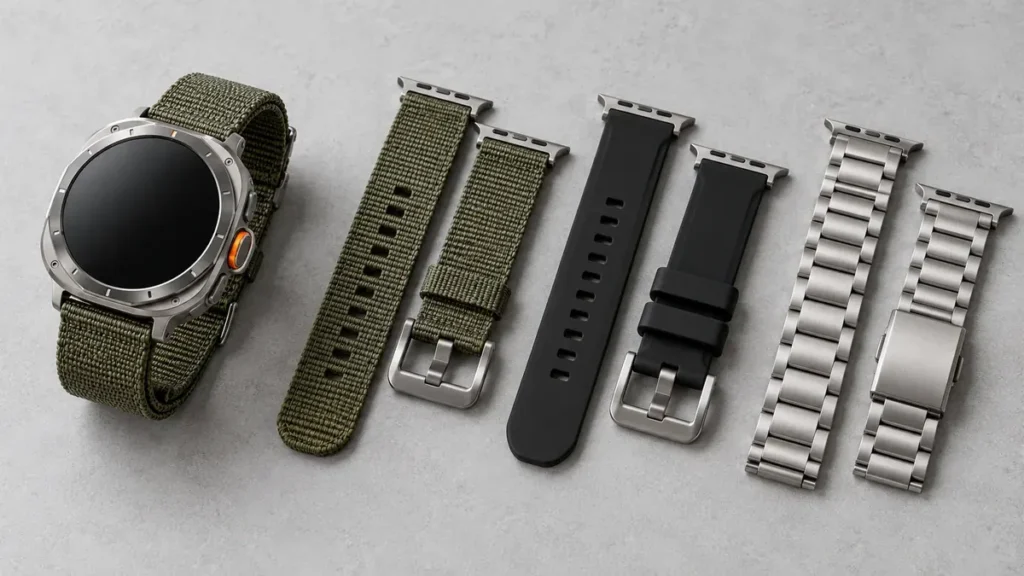
The Samsung Galaxy Watch Ultra is built to take a beating — and swapping the band is the quickest way to match it to a workout, a workday, or a weekend hike. But before you buy, there’s one catch that trips up almost every new Ultra owner: the Ultra does not use the same bands as other Galaxy Watches. Get that part right and the rest is easy. Below is a practical, no-nonsense guide to choosing a Galaxy Watch Ultra band that actually fits, feels good all day, and lasts.
Disclosure: SmartwatchAdviser sells some of the bands recommended in this guide. We only feature bands we would suggest regardless.
First, the compatibility catch most guides skip
The Galaxy Watch Ultra uses a dedicated, wider connector with a one-click attachment system — not the standard 20mm spring-bar lugs found on the Galaxy Watch 4, 5, 6, and 7. Samsung states plainly that the Ultra’s band interface is incompatible with any previously released Galaxy Watch bands (see Samsung’s own strap compatibility guide). In other words, that 20mm strap you loved on your old Galaxy Watch will not fit the Ultra, no matter how nice it looks.
So the single most important rule when shopping is this: only buy bands that specifically say they’re made for the Galaxy Watch Ultra. Listings that just say “Galaxy Watch band” or quote a 20mm/22mm width are for the older models. If a band doesn’t mention the Ultra by name or show the Ultra’s button-release connector, skip it.
(Samsung’s newer Galaxy Watch 8 series also moved to a dedicated attachment mechanism, but Samsung hasn’t confirmed it’s interchangeable with the Ultra’s — so don’t assume a “Watch 8” band will fit your Ultra unless the seller explicitly lists the Ultra too.)
How to attach and remove an Ultra band
The one-click system is genuinely quick once you’ve done it once:
To remove: Press and hold the small release button where the band meets the watch body, then slide or lift the band away from the case.
To attach: Line the band’s connector up with the watch, press the release button, seat the band into place, and let go — you should feel and hear it click. Give it a gentle tug to confirm it’s locked before you wear it. No spring-bar tool required.
Best band styles for the Galaxy Watch Ultra
There’s no single “best” band — the right one depends on what you’re doing. Here’s how the main styles stack up for the Ultra.
Silicone / rubber sport bands
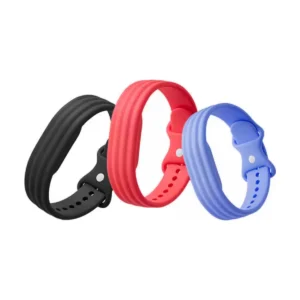
The default all-rounder. Soft silicone shrugs off sweat and water, wipes clean in seconds, and stays comfortable through workouts and showers. It’s the easiest band to live with if you’re active, and usually the most affordable. A two-tone sport strap is a good everyday choice that still looks sharp off the gym floor. Our own Galaxy Watch Ultra two-tone silicone sport strap is built for exactly this — compatible with the Ultra (not an official Samsung product), easy to rinse, and priced far below Samsung’s own straps.
Nylon / fabric sport loops
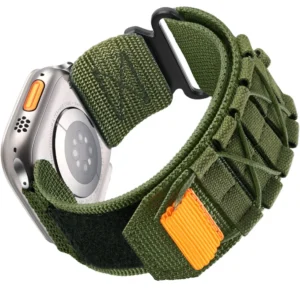
If you wear your watch around the clock — including to bed for sleep tracking — a woven nylon loop is the comfort king. It’s lightweight, breathable, and adjusts to any wrist with hook-and-loop closure, so there’s no pinching and no fixed hole to land between. The trade-off: nylon holds onto sweat and odor more than silicone, so it needs the occasional wash.
Stainless steel / metal bands
For a dressier look, a metal link or mesh bracelet turns the rugged Ultra into something you can wear to the office. Metal is durable and premium-feeling, but it’s heavier on the wrist and usually needs sizing (removing links) to fit properly. Not ideal for heavy workouts or if your wrist swells during exercise.
Official Samsung bands
Samsung’s own Marine, Trail, and Peakform bands are guaranteed to fit and feel well-made, but you pay a premium for the name. They’re worth it if you want zero compatibility worry and don’t mind the price — otherwise a well-chosen aftermarket band gives you most of the experience for a fraction of the cost.
Getting the size and fit right
Most Ultra bands are sold for the 47mm case (the only size the Ultra comes in), so case size isn’t the variable — your wrist is. Before you buy:
Measure your wrist with a flexible tape or a strip of paper just below the wrist bone. Most adult wrists fall between roughly 150mm and 210mm. Check that a band’s listed wrist range covers your measurement — a band that only goes up to 190mm will never close comfortably on a 200mm wrist.
Match the closure to your wrist. Adjustable nylon loops and buckle straps suit almost any wrist and are the safest bet if you’re between sizes. Fixed-hole silicone and sized metal bands are less forgiving, so read the size range carefully.
Think about swelling. Wrists expand during exercise and in heat. If you train hard, an adjustable or slightly looser-fitting band beats one that’s perfect at rest but tight by mile three.
Comfort, skin irritation, and sweat
This is where band choice matters most for daily wear — and where real owners run into trouble. A few things that help:
If you have sensitive skin or wear the watch overnight, lean toward breathable nylon or soft, medical-grade silicone, and avoid wearing any band so tight that moisture gets trapped underneath. Trapped sweat against the skin is the usual cause of irritation, not the material itself.
After a sweaty workout, loosen or remove the band and let your wrist dry. Rinse silicone bands under water and pat them dry; wash nylon loops periodically so bacteria and odor don’t build up. Rotating between two bands — say a silicone one for workouts and a nylon one for everyday — gives each a chance to dry out and extends the life of both.
Keeping your band clean
Silicone/rubber: Rinse under warm water, use a little mild soap for stubborn grime, and dry fully before putting it back on. Avoid harsh chemicals that can degrade the rubber.
Nylon/fabric: Hand-wash in lukewarm soapy water, rinse, and air-dry completely. Don’t put it back damp.
Metal: Wipe with a soft, slightly damp cloth and dry it off; use a soft brush to clear dust from between the links.
Avoiding cheap, low-quality bands
The Ultra’s popularity means the market is flooded with no-name straps, and quality varies wildly. A band that looks identical in photos can arrive with a loose connector, flaking “metal” coating, or silicone that smells of chemicals. To protect yourself:
Look for a band that clearly shows the Ultra’s one-click connector (not a generic lug), lists a real wrist size range, and describes the actual material rather than vague marketing. Be wary of listings that promise a genuine Samsung band at a too-good-to-be-true price — these are often counterfeits, and a bad connector can let a pricey watch fall off your wrist. A band sold honestly as “compatible with the Galaxy Watch Ultra” (rather than claiming to be official) from a seller who stands behind it is usually the safer buy.
Pairing a band with a protective case
Plenty of Ultra owners add a bumper or metal case to protect the exposed bezel — and it’s a reasonable move for a watch you take outdoors. If you do, just make sure your band and case play nicely together: some rugged cases wrap around the connector area and can interfere with slim third-party bands. Case-and-band combo sets exist for exactly this reason, but a standard Ultra band plus a low-profile case works fine in most cases. Attach the case first, then click the band on and check that it still seats fully.
Our take
For most people, a comfortable silicone sport band is the best first band for the Galaxy Watch Ultra — it handles workouts, water, and daily wear without fuss, and it’s cheap enough to own in a couple of colors. Add a breathable nylon loop if you wear the watch to sleep, and a metal band only if you want a dressier look. Browse our Samsung Galaxy Watch bands to find a fit, or start with the two-tone silicone sport strap built for the Ultra.
Own a standard Galaxy Watch instead of the Ultra? Those use different, 20mm-style bands — see our guide to the best Samsung Galaxy Watch bands for the right picks.
Frequently asked questions
Do regular Galaxy Watch bands fit the Galaxy Watch Ultra? No. The Ultra uses a dedicated, wider one-click connector, and Samsung confirms it’s incompatible with bands from earlier Galaxy Watch models. You need a band made specifically for the Ultra.
What size band does the Galaxy Watch Ultra take? The Ultra comes only in the 47mm case, so buy bands listed for the Ultra 47mm. The size that actually varies is the band length — match its wrist range (most cover about 150–210mm) to your own measurement.
Can I use Galaxy Watch 7 or Watch 8 bands on the Ultra? Watch 7 bands are 20mm and won’t fit. The Watch 8 uses a newer dedicated system, but Samsung hasn’t confirmed it’s cross-compatible with the Ultra — so only use a band if the seller lists the Ultra specifically.
Are third-party Ultra bands any good? Many are excellent and cost a fraction of Samsung’s. The key is buying one that clearly fits the Ultra’s connector, lists a real wrist-size range, and is sold honestly as compatible rather than as a fake “official” band.
How do I attach a band to the Galaxy Watch Ultra? Press the release button where the band meets the watch, seat the band’s connector into place until it clicks, and tug gently to confirm it’s locked. No tools needed.

Comments