
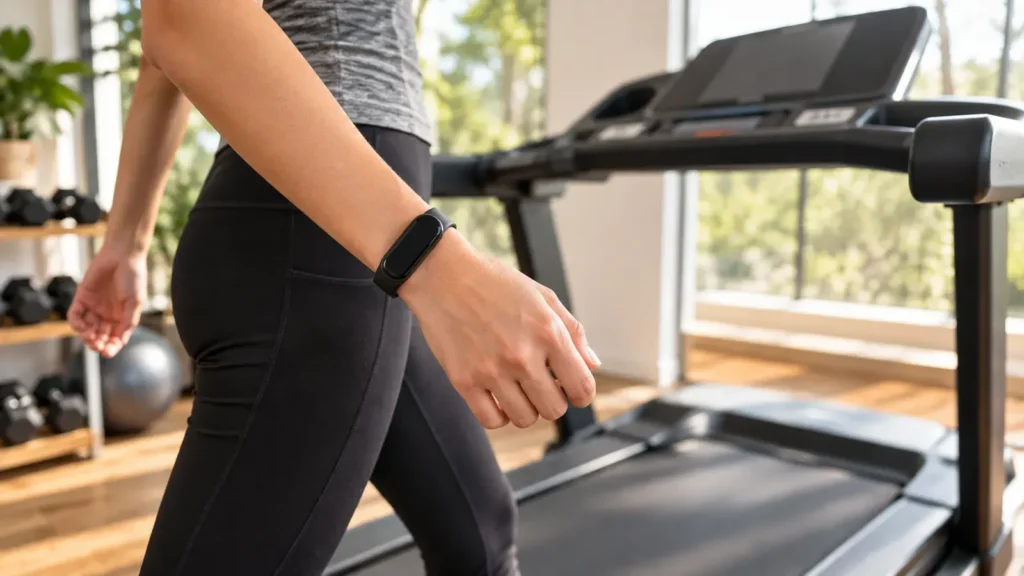
Does Fitbit count steps on a treadmill? Yes. Your tracker doesn’t know whether the ground is moving or you are, so it counts steps the same way it does outdoors: by measuring your arm swing. That’s also why treadmill step counts are sometimes too low, and why distance can drift from what the treadmill screen shows. This guide explains how Fitbit counts steps on a treadmill and how to make the numbers more accurate.
How does Fitbit count steps on a treadmill?
Fitbit trackers and smartwatches use a 3-axis accelerometer to detect movement. When you walk or run, your arm swings in a regular rhythm, and the device counts each swing pattern as a step. Google’s Fitbit help center notes that your arm must swing for steps to count during a walk or run.
On a treadmill, that works well as long as you walk or run naturally. The problems start when your arms stop moving.
Why your Fitbit might undercount steps on a treadmill
- Holding the handrails. If your hands are on the rails, your wrist barely moves, and many steps are missed. This is the most common reason for a low count.
- Resting your hands on the console. Checking your phone or adjusting the speed with your tracker hand has the same effect.
- Steep incline walking. At high inclines, people often shorten their arm swing or lean on the rails.
- A loose band. If the tracker slides around your wrist, the accelerometer reads extra noise instead of a clean swing pattern.
- Wrong wrist setting. Fitbit adjusts its sensitivity based on whether you wear it on your dominant or non-dominant hand.
Why treadmill distance doesn’t match your Fitbit
Indoors there’s no GPS, so your Fitbit estimates distance by multiplying your steps by your stride length. By default, stride length is calculated from your height and sex. If your real stride is longer or shorter than that estimate, every treadmill session will be off by the same percentage.
The treadmill’s own distance isn’t perfect either. It’s based on belt speed, and belts and sensors can drift out of calibration over time. Treat both numbers as estimates, and use whichever one you track consistently.
How to make your Fitbit more accurate on a treadmill
1. Let your arms swing naturally
Only hold the rails when you need them for balance, such as when getting on or off. Walking with a free arm swing gives the accelerometer the pattern it’s designed to read.
2. Wear the tracker snugly on top of your wrist
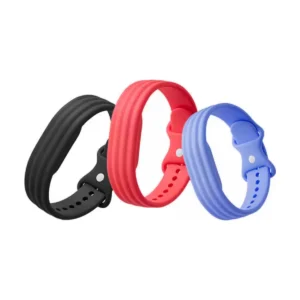
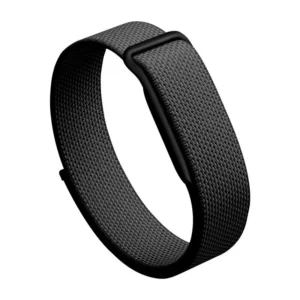
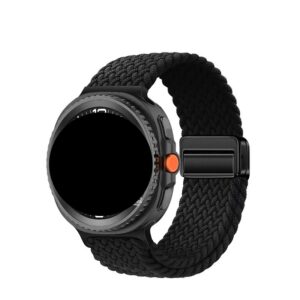
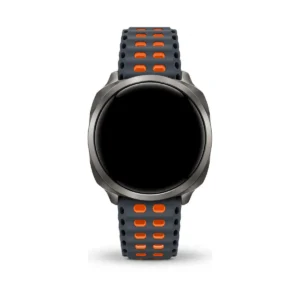
The device should sit a finger’s width above your wrist bone and stay in place when you move your arm. If it slides, tighten the band one notch, or switch to a band that fits better. A sport loop or a silicone band with closely spaced holes makes it easier to get a secure fit. Browse our Fitbit bands if your current band is too loose or uncomfortable for workouts.
3. Check your wrist setting
In the Google Health app (formerly the Fitbit app), open your device settings and make sure the wrist setting matches the hand you wear it on. Update it whenever you switch wrists.
4. Set your stride length manually
This is the biggest fix for distance. Walk a measured distance of at least 20 steps, such as a lap on a running track, count your steps, and divide the distance by the number of steps. Then enter the result in the app under Profile > Google Health settings > Activity > Stride Length. You can set separate values for walking and running.
If you also run outdoors, your running stride can update automatically after a GPS run of 10 minutes or more at a comfortable pace.
5. Use the Treadmill exercise mode
Start a treadmill workout from the Exercise app on your device instead of just walking. You get a dedicated workout record with heart rate zones, time and calories, which is easier to review than your all-day step total.
6. Compare one session with the treadmill display
Walk at a steady pace for 10 minutes without touching the rails, then compare your Fitbit distance with the treadmill’s. If the gap is consistent, adjust your walking stride length up or down to close it.
Does Fitbit count steps on a treadmill if you hold the handrails?
Only partly. Your Fitbit may still pick up some movement from your body, but most steps are missed when your wrist stays still. If you need the rails for balance or a steep incline, expect a lower step count and rely on the treadmill’s distance and the workout’s heart rate data instead.
Quick checklist
| Problem | Fix |
|---|---|
| Step count too low | Let go of the rails and keep a natural arm swing |
| Steps look random or jumpy | Tighten the band or switch to one that fits snugly |
| Distance too short or too long | Set your walking and running stride length manually |
| Counts changed after switching wrists | Update the wrist setting in the app |
| Hard to review workouts | Use the Treadmill mode in the Exercise app |
FAQ
Does Fitbit count steps on a treadmill accurately?
Step counts are usually close when you walk or run with a natural arm swing. Distance depends on your stride length setting, so it’s only as accurate as that number.
Does Fitbit count steps if I’m pushing a stroller or holding something?
The same rule applies: if your tracker arm isn’t swinging, many steps are missed. Wearing it on the arm that stays free helps.
Do floors count on a treadmill?
No. According to Fitbit’s help center, floors aren’t counted on stationary equipment such as treadmills or stair machines, because floors are measured with an altimeter that needs real elevation change.
A secure band makes treadmill tracking easier
So, does Fitbit count steps on a treadmill well? It does, as long as your arm can swing and the tracker stays in place. Keep your arms free, set your stride length once, and wear your tracker on a band that stays put. If you need a replacement, our Fitbit bands ship to the US, UK, Canada, Australia and New Zealand.

Comments